The Sainik School Entrance Exam, also known as the AISSEE (All India Sainik School Entrance Examination), is one of the most competitive school-level entrance tests in India. Every year, thousands of students from across the country appear for the exam with a dream to join Sainik Schools - institutions known for discipline, academic excellence, and a structured pathway toward the National Defence Academy (NDA) and other defence careers.
Preparing for AISSEE requires the right strategy, consistency, and a clear understanding of the syllabus and examination pattern. This complete guide will help students and parents understand how to prepare effectively for the Sainik School Entrance Exam, even if they are starting early or preparing without prior guidance.
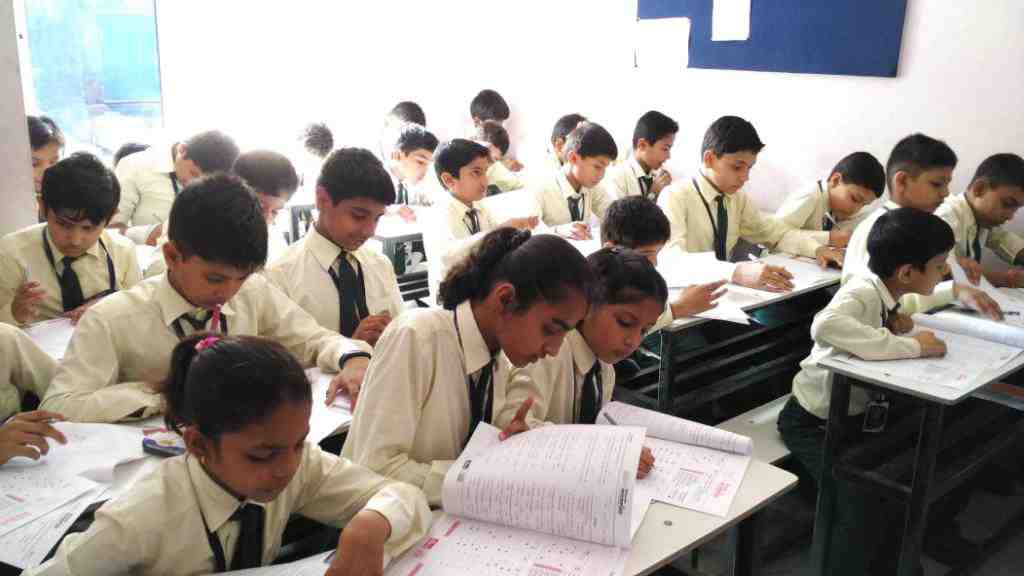
Before beginning preparation, students must understand the exam format, as it helps in planning the study schedule.
Mathematics – 50 questions (150 marks)
General Knowledge – 25 questions (50 marks)
Language – 25 questions (50 marks)
Intelligence – 25 questions (50 marks)
Total: 300 marks
Mathematics – 50 questions (200 marks)
English – 25 questions (50 marks)
Intelligence – 25 questions (50 marks)
General Science – 25 questions (50 marks)
Social Science – 25 questions (50 marks)
Total: 400 marks
AISSEE is MCQ-based, and there is no negative marking, which makes accuracy + speed extremely important.
Early preparation gives students enough time to strengthen fundamentals, revise multiple times, and practise mock papers.
Class 6 aspirants: Begin in Class 4 or 5
Class 9 aspirants: Begin in Class 7 or early 8
Starting early helps students:
Build strong mathematical foundation
Improve reading & comprehension skills
Develop the discipline required for competitive exams
Master GK & current affairs gradually
AISSEE follows a well-structured syllabus. Understanding what to study saves time and avoids confusion.
Key subjects include:
Number system, fractions, LCM & HCF
Geometry basics
Logical reasoning
Plants & animals, human body
Everyday science
Basic grammar & comprehension
Important topics include:
Algebra, geometry, mensuration
Physics, chemistry, biology fundamentals
Indian history, political system, geography
English grammar, composition skills
Analytical reasoning & pattern recognition
Create a chapter-wise checklist and update it as topics are completed.
A study timetable keeps students organised and consistent.
A good routine should include:
1–1.5 hours of Mathematics
45 minutes of English or Language
30–45 minutes of General Knowledge
30 minutes of Intelligence/Reasoning
15–20 minutes revision of previous concepts
1 mock test every week
Revision of difficult chapters
Solving previous year papers
Group discussion or quiz on GK topics
The study plan should be flexible and updated every month based on progress.
Maths carries the highest weightage in AISSEE. Strong fundamentals lead to high scores.
Understand concepts instead of memorising formulas
Practise daily to build speed
Solve NCERT textbooks thoroughly
Use sample papers and previous-year questions
Focus on topics like geometry, LCM/HCF, factors, percentage, and ratios
Revise formulas weekly
Encourage students to set a target of solving 50–80 questions daily for steady improvement.
GK is not a subject students can prepare for at the last moment. It requires regular reading and curiosity.
Read children’s GK books
Stay updated on current events
Learn basic science, history, and geography
Use practise quizzes
Watch educational videos or documentaries
For Class 9 level, focus on:
Indian Constitution
World history basics
Environmental science
Government schemes for students
Language skills determine how confidently a student understands questions and expresses answers (for Class 9 English component).
Read storybooks and newspapers daily
Practise comprehension passages
Learn grammar basics: tenses, verbs, prepositions, sentence structure
Improve vocabulary by learning 5–10 new words daily
Write small paragraphs to practise expression
The Intelligence section tests logical thinking, pattern recognition, and mental ability.
Analogies
Classification
Number series
Pattern completion
Coding-decoding
Spatial reasoning
Reasoning improves only through consistent practice, so dedicate time daily.
Solving real exam papers gives a major advantage.
Understand the difficulty level
Identify weak areas
Improve time management
Build exam confidence
Recognise common question patterns
Students should complete at least 10–12 previous-year papers before the exam.
Mock tests simulate the real exam environment and help students learn to handle pressure.
Time yourself strictly
Review mistakes after every test
Maintain a notebook of errors
Revisit weak topics
Gradually improve speed
Mock tests should increase in difficulty as the exam approaches.
Though AISSEE does not include a physical test, students admitted to Sainik Schools must follow a structured physical training routine.
Encourage regular exercises such as:
Jogging
Yoga
Light workouts
Stretching
Sports activities
This helps build stamina and discipline.
Revision is the backbone of success. Without periodic revision, students forget concepts even after learning them well.
Use 3-time revision system:
1st: After completing a topic
2nd: After one week
3rd: Before mock tests
Maintain flashcards or short notes
Revise formulas daily
Revise GK facts weekly
Revision must be planned, not random.
While many students prepare at home, structured guidance often results in better discipline, consistency, and performance.
Schools and institutions that offer AISSSE-oriented support help students stay focused and practise systematically.
In Muzaffarpur and nearby regions, some preparatory schools integrate Sainik School coaching into their academic environment, making it easier for children to balance school studies with exam preparation.
For example, educational institutions like Grandview Prep School provide a preparatory setup where students follow regular classes, structured study hours, and disciplined routines that naturally support competitive exam training – without promoting any specific brand or coaching.
One of the biggest myths about the Sainik School exam is that only “toppers” can clear it.
The truth is:
Even average students can succeed if they:
Follow a timetable
Practise daily
Revise regularly
Avoid last-minute preparation
Small improvements every day lead to big results.
The last month before the exam is the most crucial.
Complete 2–3 mock tests weekly
Revise NCERT books thoroughly
Strengthen Maths and Intelligence sections
Avoid learning new topics (unless very important)
Improve accuracy over speed
Practise OMR filling techniques
A simple but consistent plan can drastically improve performance in the final month.
Preparing for the Sainik School Entrance Exam requires a combination of discipline, strong conceptual understanding, and continuous practice. The exam is designed to evaluate not just academic knowledge but also logic, awareness, and the ability to think clearly under pressure.
Students who start early, follow a structured routine, and seek the right guidance significantly increase their chances of success. Whether preparing at home or through a school-based preparatory program, focus, motivation, and consistency are the keys to cracking AISSEE.
With the right mindset and steady preparation, any student can aim confidently for admission into a prestigious Sainik School, and this guide provides the complete roadmap to get started.